Free and Low-Cost Museums in Paris: Your Ultimate Art Guide
We know the feeling: you’ve just landed in Paris after a long flight from Sydney or Melbourne, and suddenly every euro feels like it matters. Coffee costs how much? A museum ticket costs what? Take a breath. Here’s the good news we always share with fellow Australians — some of the world’s greatest art is sitting right there in Paris, completely free, and plenty more is cheaper than a round of drinks back home. This Paris art guide is built to help you see the best of French art history without torching your travel budget.
Why Paris Is a Paradise for Budget-Conscious Art Lovers
Paris gets a reputation as an expensive city, and honestly, parts of it are. But when it comes to museums, the city quietly rewards careful planners. Many permanent collections are free year-round, and national museums offer free entry to under-26 EU residents and under-18s. Now, a quick reality check for our readers: Australians generally do not qualify for the under-26 EU free entry, since it’s tied to EU residency. But there’s a workaround — many Paris museums throw open their doors free on the first Sunday of the month, and that’s open to everyone, Australians included.
Free Permanent Collections vs. Temporary Exhibitions
It’s worth understanding the difference before you book anything. A museum’s permanent collection is the art it owns and displays year-round — that’s what’s free at places like Musée Carnavalet and Petit Palais. Temporary exhibitions are the rotating, ticketed shows, and they usually cost extra even at otherwise-free museums. So if you’re watching your spending, skip the blockbuster exhibition and enjoy the permanent collection instead. You’ll still see masterpieces, just without the queue and the €18 price tag.
First Sunday Freebies: What Australians Need to Know
The first Sunday of each month offers free entry to many Paris museums, including Musée d’Orsay and Musée de l’Orangerie. This is the single best budget tip in this guide. The catch? Everyone knows about it. Arrive early — we mean right at opening — or expect long lines by mid-morning. Also check each museum’s website before you go, because a few swap the first Sunday for a different free day, and some suspend the offer during peak holiday periods.
Always-Free Museums in Paris You Shouldn’t Miss
These three museums cost nothing, any day of the year, for everyone. They’re also fantastic alternatives to the Louvre and Musée d’Orsay when those queues snake around the courtyard.
Musée Carnavalet: Paris History for Free
Dedicated to the history of Paris itself, Musée Carnavalet sits in the Marais and tells the city’s story through paintings, furniture, photographs and objects. The permanent collection is free, and it’s a brilliant introduction to how Paris became Paris. If you’re the kind of traveller who wants context before you look at art, start here.
Petit Palais: Fine Arts Without the Crowds
Just off the Champs-Élysées, the Petit Palais holds a free permanent collection spanning paintings, sculpture and decorative arts in a gorgeous Beaux-Arts building. It’s the quieter, calmer cousin of the Grand Palais next door, and honestly, we often prefer it. No ticket, no stress, and a lovely garden café for a break.
Musée d’Art Moderne de Paris: Modern and Contemporary Freebie
On the eastern edge of the city near the Eiffel Tower, this museum’s permanent collection is free and covers 20th-century and contemporary art. It’s a smart alternative to the Centre Pompidou if you want modern art without the ticket price. Check opening days before you go — like many Paris museums, it closes one day a week.
Low-Cost Museums That Deliver Big on French Art History
These three charge admission, but each costs less than the Louvre and tends to be less crowded. For anyone building a French art history itinerary on a budget, they’re essential.
Musée de l’Orangerie: Monet’s Water Lilies on a Budget
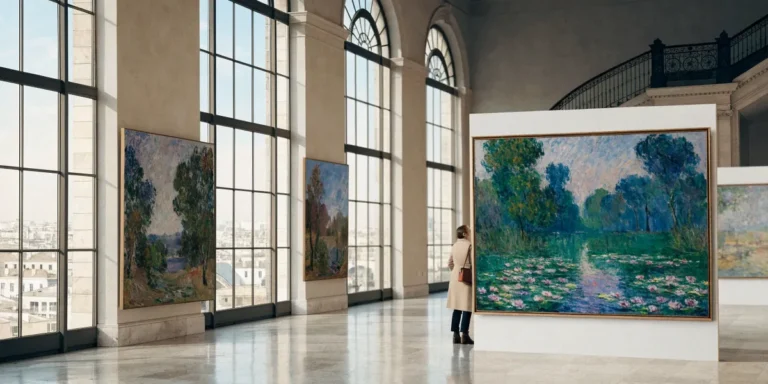
Entry is around €12.50, and for that you get Monet’s Water Lilies displayed in purpose-built oval rooms — one of the most moving art experiences in Paris. It’s also free on the first Sunday of the month. Go early, stand in the middle of the room, and just breathe.
Musée Rodin: Sculpture Gardens and Masterpieces
Around €13 gets you into the museum and its sculpture garden, where The Thinker sits among the roses. The garden alone is worth the ticket on a sunny afternoon. It’s a relaxed, uncrowded alternative to the big-name museums.
Musée Picasso: A Deep Dive into Picasso’s World
For roughly €14, the Musée Picasso in the Marais takes you through the artist’s life and work in a beautifully restored mansion. It’s far quieter than the Louvre and gives you real depth on one artist rather than a whirlwind tour of everything.
Louvre Tips for Australians on a Budget
Here’s the honest truth: the Louvre is free for under-18s and under-26 EU residents, but Australians pay around €22. That’s not cheap, but it’s manageable with a bit of strategy. The Louvre also runs free entry for under-26s on the first Friday evening of the month — check the current rules on the official site, as eligibility and timing change.
When to Visit the Louvre for Free or Cheap
Late Wednesday and Friday evenings are your friends. The museum stays open later, and crowds thin out considerably after 6pm. If you’re paying full price, book a timed slot online in advance to skip the ticket queue. And if you’re under 26 with EU residency, bring proof — but Australians without EU residency should budget for the €22.
Navigating the Louvre Without Breaking the Bank
Small savings add up inside the Louvre:
- Use the free cloakroom — you can’t bring large bags in anyway, and it saves you lugging coats around.
- Bring your own snacks and a water bottle; there are free water fountains, and the cafés inside are pricey.
- Pick two or three wings rather than trying to “do” the whole museum — you’ll enjoy it more and spend less time (and money) in the café recovering.
- Download the free museum map app before you arrive to avoid getting lost.
Musée d’Orsay: Affordable Impressionism and French Etiquette
Musée d’Orsay costs around €16, but it’s free on the first Sunday of the month and for under-18s. It houses the world’s best collection of Impressionist art, and the building itself — a converted railway station — is worth the visit alone.
Musée d’Orsay Free Days and Discounts
Mark the first Sunday of the month in your calendar, and arrive at opening time. If you’re visiting on a paid day, book online and consider a late Thursday slot when the museum stays open later. Under-18s go free any day, so families should factor that in.
French Etiquette in Museums: Do’s and Don’ts
Museum staff notice manners, and a little etiquette goes a long way. Always say “bonjour” before asking a question — even in English, it’s expected. Keep a quiet, respectful tone in galleries; raised voices carry and draw looks. And never touch the art, no matter how tempting. A few more pointers:
- Say “bonjour” when entering a shop or museum, and “merci” when leaving.
- Don’t photograph with flash where signs prohibit it.
- Keep phone calls outside the galleries.
- Ask “Parlez-vous anglais?” before launching into English.
Practical Tips for Australian Travellers to Save Even More
Beyond individual museum tickets, a few broader strategies stretch your budget further across a whole trip.
Is the Paris Museum Pass Worth It for Australians?
Only if you’re visiting many museums in a short window. The pass covers dozens of sites over consecutive days, so it pays off for a packed three- or four-day art blitz. If you’re planning a slower trip with free days and low-cost museums, skip it — you’ll likely spend less buying individual tickets.
Free Walking Tours and Art Galleries
Use public transport rather than taxis — a Navigo Easy card makes metro and bus travel cheap and simple. Check museum websites for free days before you book anything. And remember: many museums are free on the first Sunday of the month, so arrive early to avoid queues. Free walking tours (tip-based) and commercial galleries around the Marais and Saint-Germain also give you art and culture without an entry fee.
FAQ
Are Paris museums free for Australian tourists?
Some are. Musée Carnavalet, Petit Palais and Musée d’Art Moderne de Paris have permanently free permanent collections. Many national museums, including Musée d’Orsay and Musée de l’Orangerie, are free on the first Sunday of the month for everyone, Australians included.
Do Australians get the under-26 free entry?
Generally no. The under-26 free entry to many national museums applies to EU residents. Australians without EU residency should expect to pay full price, though under-18s usually go free.
Is the Louvre free on the first Sunday of the month?
No — the Louvre doesn’t run the first-Sunday free offer. It’s free for under-18s and under-26 EU residents, but Australians pay around €22. Check the official Louvre site for any current free-evening offers.
What’s the cheapest way to see Impressionist art in Paris?
Visit Musée d’Orsay on the first Sunday of the month for free entry, or pay around €16 on a normal day. Musée de l’Orangerie at around €12.50 is another affordable option for Monet’s Water Lilies.
What etiquette should I follow in French museums?
Always say “bonjour” before asking a question, keep your voice down in galleries, and never touch the art. A polite, quiet manner is appreciated everywhere, from the Louvre to small neighbourhood museums.
You don’t need a big budget to experience the best of Paris art and culture. Plan around the first Sunday free days, lean on the permanently free museums, and treat the low-cost gems like the Orangerie and Rodin as your splurges. With a little planning, French art history is well within reach for any Australian traveller.