Musée d’Orsay: Impressionist Highlights You Can’t Miss
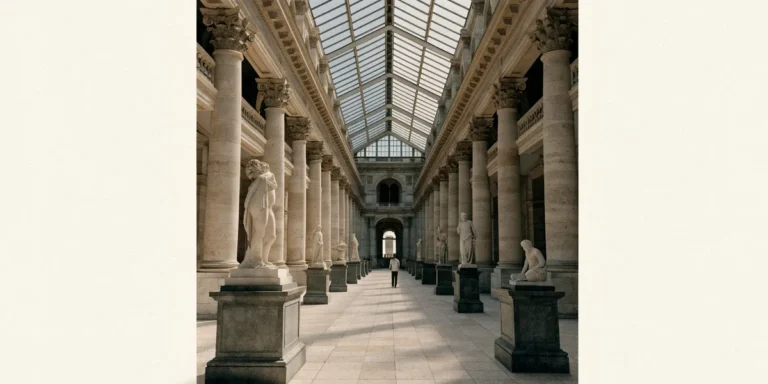
You push through the entrance and the first thing that hits you isn’t a painting — it’s the light. It floods down through the vast arched ceiling of what was once a railway station, landing on a long central aisle lined with sculptures. After the Louvre’s endless corridors and crowds shuffling past the Mona Lisa, the Musée d’Orsay feels almost intimate. It’s smaller, yes, but it’s also sharper in focus: this is the house of Impressionism, and for Australian art lovers making the long haul to Paris, it’s the museum that will stay with you longest.
Why the Musée d’Orsay Should Be on Your Paris Itinerary
The Musée d’Orsay occupies a converted Beaux-Arts railway station — the Gare d’Orsay, built for the 1900 World’s Fair — and that history is part of the experience. The great clock faces, the soaring glass roof, the sense that you’re standing inside a cathedral of iron and stone: it all frames the art beautifully. The collection covers 1848 to 1914, which means it picks up exactly where the Louvre’s classical and Renaissance holdings leave off. If the Louvre shows you where French art came from, the Orsay shows you where it exploded.
It also holds the world’s largest collection of Impressionist and Post-Impressionist masterpieces. Nowhere else — not the Met, not the National Gallery in London — can you see this concentration of Monet, Renoir, Degas, Van Gogh, Cézanne and Gauguin under one roof.
From Railway Station to Art Temple: A Brief History
The Gare d’Orsay opened in 1900 and was designed to handle the new electric trains of the era. By 1939, its platforms were too short for modern trains and it fell into decline, serving as a mailing centre during WWII and later as a film set. President François Mitterrand pushed for its conversion into a museum, and it opened in 1986. The result is a building that feels purpose-built for art even though it never was.
How It Compares to the Louvre: Our Take
We tell every Australian traveller the same thing: don’t try to do both in one day. The Louvre is a marathon — 35,000 works, eight departments, endless walking. The Orsay is a 2-3 hour experience you can actually absorb. If you have limited time in Paris, the Orsay gives you more emotional payoff per hour. Do the Louvre for the icons, then come here for the paintings that changed how we see the world.
The Impressionist Highlights You Can’t Miss
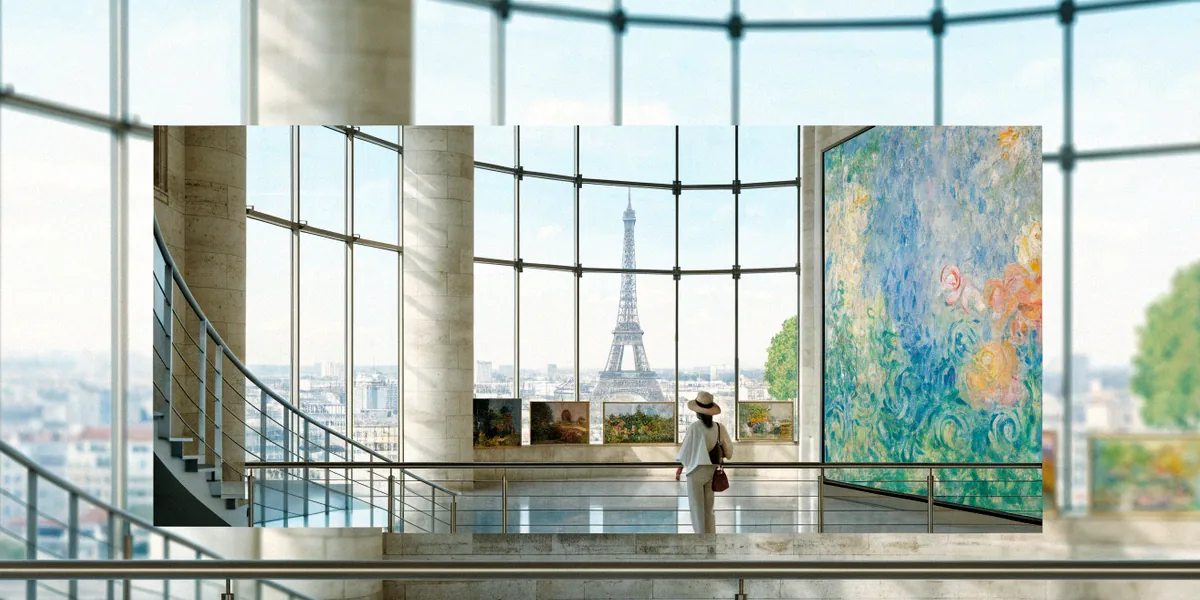
Head straight to the fifth floor. This is where the Impressionist masterpieces live — Monet, Renoir, Degas and friends — displayed in galleries with views through the station’s giant clocks across the Seine to Montmartre. These are the works that define French art history, and seeing them in person is genuinely different from seeing them in a book.
Renoir’s Dance at Le Moulin de la Galette: The Epitome of Joy
Renoir painted this sun-dappled scene of Parisians dancing and drinking in Montmartre in 1876. What makes it extraordinary is the light — dappled, shifting, alive — and the sense of movement in the crowd. It’s the happiest painting in the museum, and it captures a version of Paris that was disappearing even as Renoir painted it.
Van Gogh’s Self-Portrait: A Glimpse into the Artist’s Soul
Van Gogh painted dozens of self-portraits, but the one here — from 1889, painted in Saint-Rémy — is among the most haunting. The swirling brushwork and intense gaze show a man wrestling with his own mind. Stand close enough to see the thickness of the paint. It’s not a portrait of a face; it’s a portrait of a state of mind.
Degas’ Little Dancer Aged Fourteen: A Sculpture That Shocked Paris
When Degas exhibited this wax sculpture of a young ballet student in 1881, critics were appalled. She wore a real fabric tutu and had real hair. She wasn’t idealised — she was a working-class girl with a slightly awkward stance. It broke every rule about what sculpture should be, and it’s now one of the most beloved works in the museum.
Beyond the Impressionists: Other Masterpieces to Seek Out
The Orsay isn’t only Impressionists. The Post-Impressionist and Realist collections on the middle floors are just as essential for a full French art history experience. These are the artists who took Impressionism’s freedom and pushed it somewhere stranger.
Manet’s Olympia: The Scandal That Changed Art
Exhibited in 1865, Olympia caused an uproar. A nude woman staring directly at the viewer, unashamed, with a Black maid beside her — it was read as a challenge to every convention of the academy. Manet paved the way for modern art with this single canvas.
Cézanne’s The Card Players: A Study in Form
Cézanne painted several versions of peasants playing cards, and the Orsay holds one of the finest. Look at how the figures are built from blocks of colour rather than smooth shading. This is the beginning of Cubism, painted decades before Picasso.
Gauguin’s Tahitian Women: Escape to Paradise
Gauguin left France for Tahiti in search of something “primitive” and untouched, and the paintings he brought back are lush, flat and deliberately unnatural in colour. They’re also complicated — a Frenchman projecting his fantasies onto another culture. Worth seeing with that context in mind.
Practical Tips for Australian Visitors
Planning makes a huge difference here. The Orsay is popular, and the queue without a ticket can eat an hour of your day.
Best Times to Visit and How to Skip the Line
The Paris Museum Pass allows skip-the-line access to the Musée d’Orsay, which is a genuine time-saver if you’re hitting multiple museums. Otherwise, book a timed ticket online before you leave Australia. Early morning (right at opening) or late afternoon (after 4pm, when the museum stays open until 6pm or later on Thursdays) are the quietest windows.
Getting There: Metro, RER, and Walkable Routes
Australian visitors can reach the museum easily via RER C from the Eiffel Tower (get off at Musée d’Orsay station) or a short 10-minute walk from the Louvre across the Seine via the Pont du Carrousel. Metro line 12 (Solférino) and line 8 (Concorde) are also close.
Accessibility and Amenities for Aussie Travellers
The museum offers free entry for under-18s and EU residents under 26, but Australians should book timed tickets online regardless of age. The building is fully wheelchair accessible, with lifts to all floors. Cloakrooms are free, and there’s a staffed luggage area — handy if you’re coming straight from Gare du Nord or Austerlitz.
French Etiquette for Art Lovers
Museum etiquette in France is taken seriously, and a little effort goes a long way.
Museum Manners: Do’s and Don’ts
- Keep your voice low — French galleries are quieter than Australian ones, and phone calls are frowned upon.
- Never touch the artworks, even the frames.
- No flash photography — it damages pigments and is banned in most rooms.
- Don’t picnic inside the museum. Eat in the café or on the terrace.
- Stand aside if you’re studying a work so others can pass.
Greetings and Gratitude: Basic French Phrases
Always say “bonjour” before asking a question — walking up to staff without it is considered rude. Useful phrases: “Merci” (thank you), “S’il vous plaît” (please), “Où sont les Impressionnistes?” (where are the Impressionists?), and “Au revoir” (goodbye). A polite bonjour before asking for directions will get you a much warmer response.
Making the Most of Your Visit: Our Suggested Route
We recommend a focused 2-3 hour visit rather than trying to see everything.
Floor-by-Floor Strategy
- Start on the fifth floor for the Impressionist galleries — Renoir, Van Gogh, Degas, Monet.
- Work down to the middle floors for Post-Impressionists and Realists — Manet, Cézanne, Gauguin.
- Check the ground floor for special exhibitions and the sculpture hall.
- Finish with a break in the café before heading back out.
Where to Refuel: Café Campana and Nearby Options
Café Campana on the fifth floor has a stunning view through the station’s giant clock across the Seine — it’s worth the slightly higher prices. If you’d rather eat outside, cross to the Tuileries or walk along Rue de Lille for bistro options.
FAQ
How long should I spend at the Musée d’Orsay?
Two to three hours is ideal for most visitors. If you’re an art enthusiast, allow four. Trying to see everything in one visit will leave you exhausted.
Is the Musée d’Orsay included in the Paris Museum Pass?
Yes. The Paris Museum Pass includes the Musée d’Orsay and allows skip-the-line access, which saves significant time during peak season.
Can I take photos inside the museum?
Yes, but without flash. Tripods and selfie sticks are not permitted, and some special exhibition rooms ban photography entirely.
Is the museum free for Australians?
Not generally. Free entry applies to under-18s and EU residents under 26. Australian visitors should book timed tickets online in advance, which also lets you skip the main queue.
What’s the easiest way to get there from the Eiffel Tower?
Take the RER C line from Champ de Mars–Tour Eiffel directly to the Musée d’Orsay station. It’s one stop and takes about five minutes.
The Musée d’Orsay isn’t just a museum — it’s a journey through one of the most transformative periods in art history, housed in one of the most beautiful buildings in Paris. Give it a morning or an afternoon, take your time on the fifth floor, and then step outside and walk along the Seine. The paintings will follow you.