Gustave Courbet and Realism: Understanding A Burial at Ornans
When Gustave Courbet unveiled A Burial at Ornans at the 1850–1851 Paris Salon, the reaction was closer to a brawl than an art review. Critics sneered, the public argued, and the academic establishment felt openly insulted. Yet this enormous canvas of a provincial funeral — painted between 1849 and 1850 — became one of the founding monuments of Realism and a turning point in French art history. For Australians planning a Paris art guide itinerary around the Musée d’Orsay, understanding why this painting caused such a fuss makes standing in front of it far more rewarding.
Courbet’s Bold Break from Romanticism and Neoclassicism
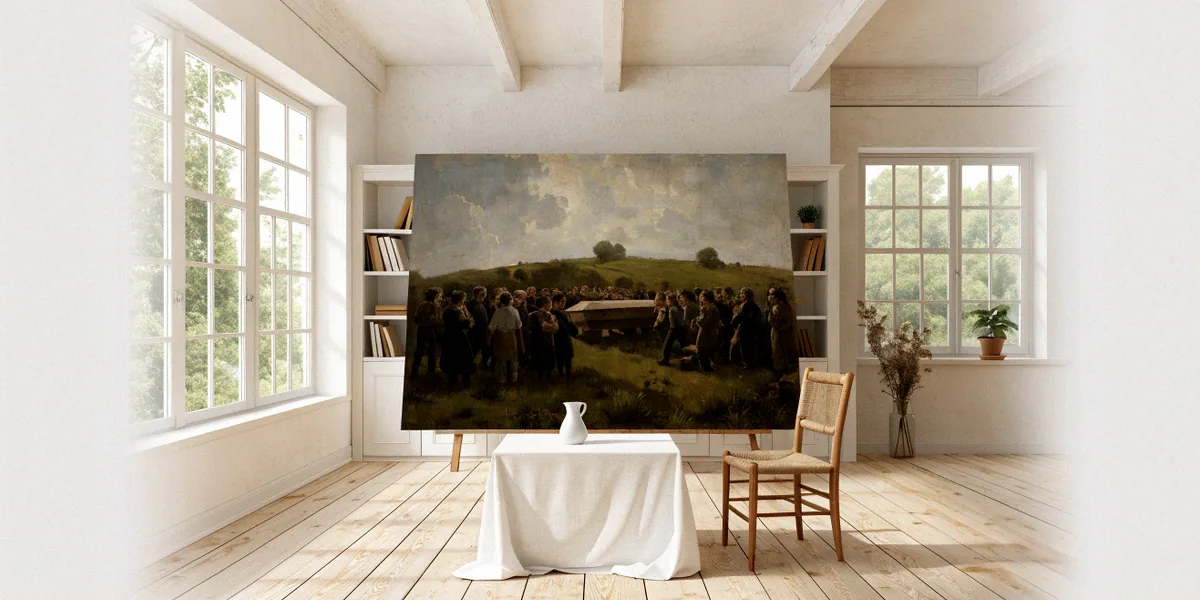
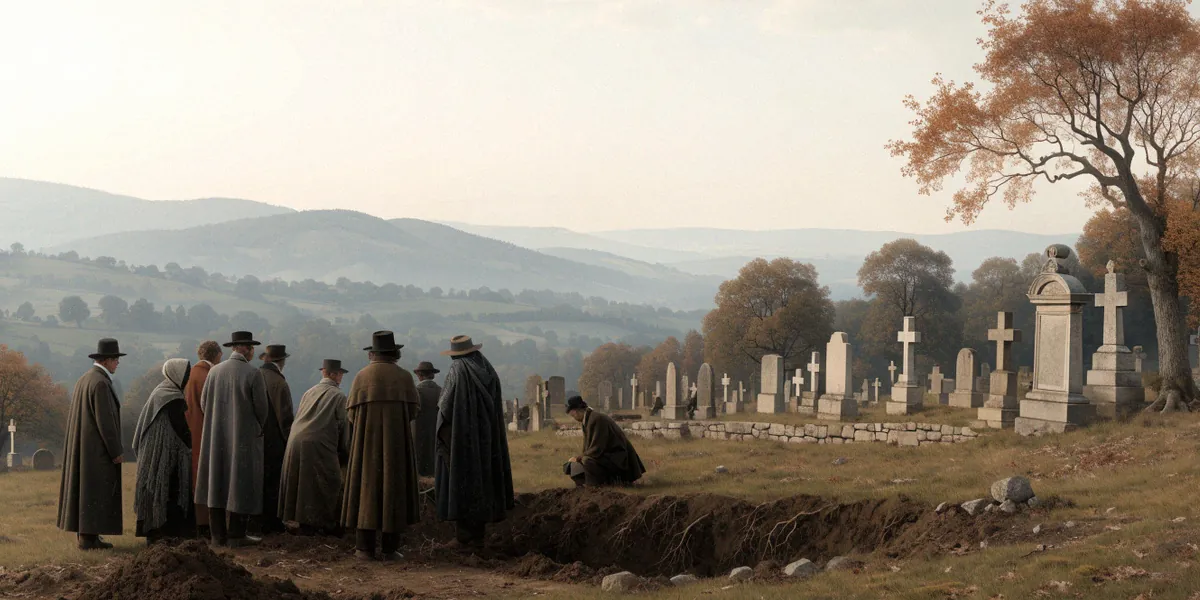
To appreciate the shock value of A Burial at Ornans, we need to remember what French painting looked like in the mid-19th century. The Academy rewarded Neoclassical scenes of mythological heroes and Romantic dramas of passion and exoticism. Subjects were elevated, bodies were idealised, and history painting — the genre Courbet chose to work in — was reserved for saints, generals and emperors. Courbet threw all of that out. He painted ordinary people from his hometown of Ornans, a small town in the Franche-Comté region of eastern France, at a real funeral he had witnessed. No gods, no allegory, no heroic poses — just neighbours, farmers, local officials and grieving relatives, life-sized and unglamorous.
The Artist as a Provocateur: Courbet’s Self-Image
Courbet was born in Ornans in 1819 and never hid his provincial roots, even after moving to Paris. He cultivated a blunt, anti-establishment persona, openly mocked academic rules, and positioned himself as a man of the people who painted what he could see and touch. That swagger is part of why the painting landed like a provocation: it was not a naive mistake but a deliberate challenge to the art world’s hierarchy of subjects.
From Ornans to Paris: A Provincial Painter Takes On the Establishment
By bringing a rural funeral to the walls of the Salon — the official, juried exhibition that made or broke careers — Courbet insisted that life in a small French town deserved the same scale and seriousness as a coronation. Parisian audiences, used to looking down on the provinces, found the claim audacious. In many ways, the painting is a statement of regional pride as much as an artistic manifesto.
What Exactly Is Realism? Key Ideas Behind the Movement
Realism was a mid-19th-century movement that rejected idealisation in favour of everyday life, unidealised bodies and social truth. Realist painters and writers wanted art to describe the world as it actually was — including labour, poverty, boredom and ordinary death. The writer Champfleury became one of the movement’s most vocal champions, defending Courbet in print and helping to define Realism as a serious intellectual position rather than mere ugliness. In 1855, when the official Exposition Universelle rejected several of his works, Courbet built his own exhibition space nearby — the Pavillon du Réalisme — and staged a one-man show that cemented his reputation as the movement’s leader.
Realism vs. Romanticism: A Quick Comparison
- Subject: Romanticism favoured dramatic historical or exotic scenes; Realism favoured contemporary, everyday life.
- Figures: Romanticism idealised bodies and emotions; Realism painted ordinary faces, wrinkles and working clothes.
- Scale: Romanticism used grand scale for grand themes; Realism used grand scale for ordinary people — a deliberate shock.
- Purpose: Romanticism pursued sublime emotion; Realism pursued honesty and social observation.
Courbet’s Manifesto: ‘Show Me an Angel and I’ll Paint One’
Courbet reportedly said, “Show me an angel and I’ll paint one” — a pithy summary of his refusal to paint what he could not see. It captures the empirical, stubborn streak in Realism: if it cannot be observed, it does not belong on his canvas. This attitude directly undermined the Academy’s reliance on religious and mythological imagery.
A Burial at Ornans: Monumental Scale, Ordinary Subject
The canvas measures approximately 6.7 by 3.1 metres — roughly the size of a history painting celebrating a king or a battle. Instead, it shows a long, frieze-like line of mourners arranged across a shallow, stage-like space, with a freshly dug grave in the foreground and a pale, rocky landscape behind. There is no clear hero, no central figure to guide our eye, and no dramatic climax. The painting was given a major 10-year restoration completed in 2016 at the Musée d’Orsay, which cleaned centuries of grime and revealed the subtlety of Courbet’s palette.
The Figures: Who’s Who in the Funeral Crowd
Courbet populated the scene with real people from Ornans, including his own family and local dignitaries. Among the identifiable figures are his father, sisters and friends, alongside the mayor, the justice of the peace and veterans of the Revolutionary and Napoleonic wars. The result is a portrait of a community rather than a tribute to an individual — an important distinction that unsettled viewers expecting a clear protagonist.
Composition and Colour: Why It Feels So Unsettling
The frieze-like arrangement flattens the scene and denies us the comfortable depth of traditional perspective. Earthy browns, blacks and muted greys dominate, with flashes of red and white in the clergy and mourners. The grave opening at the front of the picture places us almost inside the ceremony, while the faces — some weeping, some blank, some distracted — refuse to deliver a single, tidy emotion. That ambiguity is precisely what makes the painting feel so modern.
Why A Burial at Ornans Caused a Scandal
Critics at the 1850 Salon called the painting ugly and vulgar. They mocked the plain faces, the clumsy mourners and the sheer presumption of giving a country funeral the scale of a history painting. The work challenged academic norms on three fronts at once: subject, size and style. And yet the French government purchased it — a sign that official taste was already shifting — and it was later transferred to the Louvre before eventually moving to the Musée d’Orsay, where it hangs today.
Critical Backlash: ‘The Ugliest Man in France’
Courbet himself was mocked as “the ugliest man in France” by hostile critics, a jab aimed as much at his politics and persona as his face. The insults reveal how personal the attack on Realism became: it was not just a debate about brushwork, but about who deserved to be painted and who got to decide.
From Rejection to Revolution: The Painting’s Legacy
Over time, A Burial at Ornans moved from scandal to canon. Its influence runs through later Realists, the Impressionists’ interest in modern life, and the social documentary tradition of the 20th century. What once looked like bad manners now reads as a founding gesture of modern art.
Seeing Courbet in Paris: Practical Tips for Australians
For Australian travellers, the good news is that the painting is easy to visit. It is held at the Musée d’Orsay in Paris, on the Left Bank of the Seine, and forms part of the museum’s superb Realist and early modern collection. We recommend planning at least half a day there, since the same rooms hold works by Millet, Daumier and Manet that deepen the story. Australian travellers can book Musée d’Orsay tickets online to skip queues, which is especially valuable in peak summer months. The museum is free for under-26 EU residents, but Australians should check current ticketing and pricing before travelling, as policies change.
Where to Find A Burial at Ornans in Paris
The painting hangs in the Musée d’Orsay’s Realism galleries, typically on the upper level alongside other Courbet works. If you also want to explore the Louvre’s French painting collection, allow a separate day — the Louvre’s holdings cover earlier French and European traditions and provide useful context for what Courbet was rebelling against.
Pairing Your Visit with French Etiquette Basics
A little French etiquette goes a long way in Paris museums and cafés. A few habits we always recommend:
- Say “bonjour” before any question — it is expected, not optional.
- Keep your voice low in galleries; guards will remind you if you don’t.
- Don’t touch the frames or lean on walls, even for photos.
- Queue patiently and let exiting passengers off the métro before boarding.
- Try a little French first; a polite attempt is always appreciated.
These small courtesies make museum days smoother and often lead to warmer conversations with staff and locals.
FAQ
Where is A Burial at Ornans currently displayed?
It is held at the Musée d’Orsay in Paris, in the museum’s Realism galleries. It moved there after earlier stints at the Louvre.
How big is the painting?
The canvas measures approximately 6.7 by 3.1 metres, making it one of the largest Realist paintings of the 19th century.
When was it first exhibited?
It was first shown at the 1850–1851 Paris Salon, where it provoked widespread criticism and debate.
Do Australians need to book Musée d’Orsay tickets in advance?
We strongly recommend it. Australian travellers can book Musée d’Orsay tickets online to skip queues, particularly during peak season. Note that free entry for under-26 EU residents does not automatically apply to Australian visitors, so check current ticketing before you go.
What should I see nearby to understand Courbet better?
Combine your visit with other Realist works at the Musée d’Orsay, then explore the Louvre’s French painting collection for the academic tradition Courbet was reacting against.
Standing in front of A Burial at Ornans in person is worth the trip. Its quiet, stubborn power — a small-town funeral painted at the scale of history — still unsettles and moves viewers nearly two centuries later. French art history is best experienced live, and this canvas is one of the best reasons to book that flight to Paris.